 En
 Da

When the Maker Association opened a laboratory for sustainable product development beneath Langebro in Copenhagen in 2015, the aim was to create better opportunities for hands-on entrepreneurship. Craftspeople, designers and people from other professional backgrounds were to be brought together under one roof and given access to workshops and expertise that could transform an idea into a product – and perhaps lay the foundations for a start-up.
At the time, focusing on craftsmanship wasn’t necessarily the most obvious path to take.
“Back in 2015, people were a bit sceptical when someone suggested we should incorporate the craft trades, because at that time everyone’s eyes were fixed on fintech. But of course, it has turned out to be the right path,” says Malte Hertz Jansen, CEO of Maker.
In April 2026, Maker took a new step to strengthen opportunities for physical entrepreneurship and moved into DSB’s listed smithy, dating from 1907, in Jernbanebyen in Copenhagen. So far, the association has transformed 1,000 m² of this space into an open workshop and knowledge centre called LITRA.
LITRA combines traditional craftsmanship with modern technology and is a community of members where students, entrepreneurs, established small businesses and professionals work side by side. The facilities include a woodworking workshop, digital fabrication facilities and space to develop prototypes, products and new businesses.
Around 65 active members aged between 19 and 73 currently use the premises. Together, they represent 25 different professions.
You learn by making things yourself
On a tour of LITRA, the Otto Mønsted Foundation meets Felix, who works at an architectural practice. Over the past four to five weeks, he has been using the workshop to complete a prototype chair, and he has now reached the upholstery stage.
He points out that at LITRA he has the opportunity to work on the prototype throughout the entire design process, and this has its advantages:
‘I’ve used the state-run workshops before, but you always have to apply for access and be approved. If a place like LITRA didn’t exist, and you couldn’t get into the state-run workshops, we’d have to pay someone in town to make a prototype for us. But then we wouldn’t be able to spot any faults in the prototype ourselves. You learn an incredible amount from taking a hands-on approach to the whole design process,” says Felix.
It is precisely this opportunity to test things out, make adjustments and start afresh that lies at the heart of the idea behind LITRA. Here, the path from idea to finished product should be short, and members should be able to make use of both the workshops and each other’s expertise.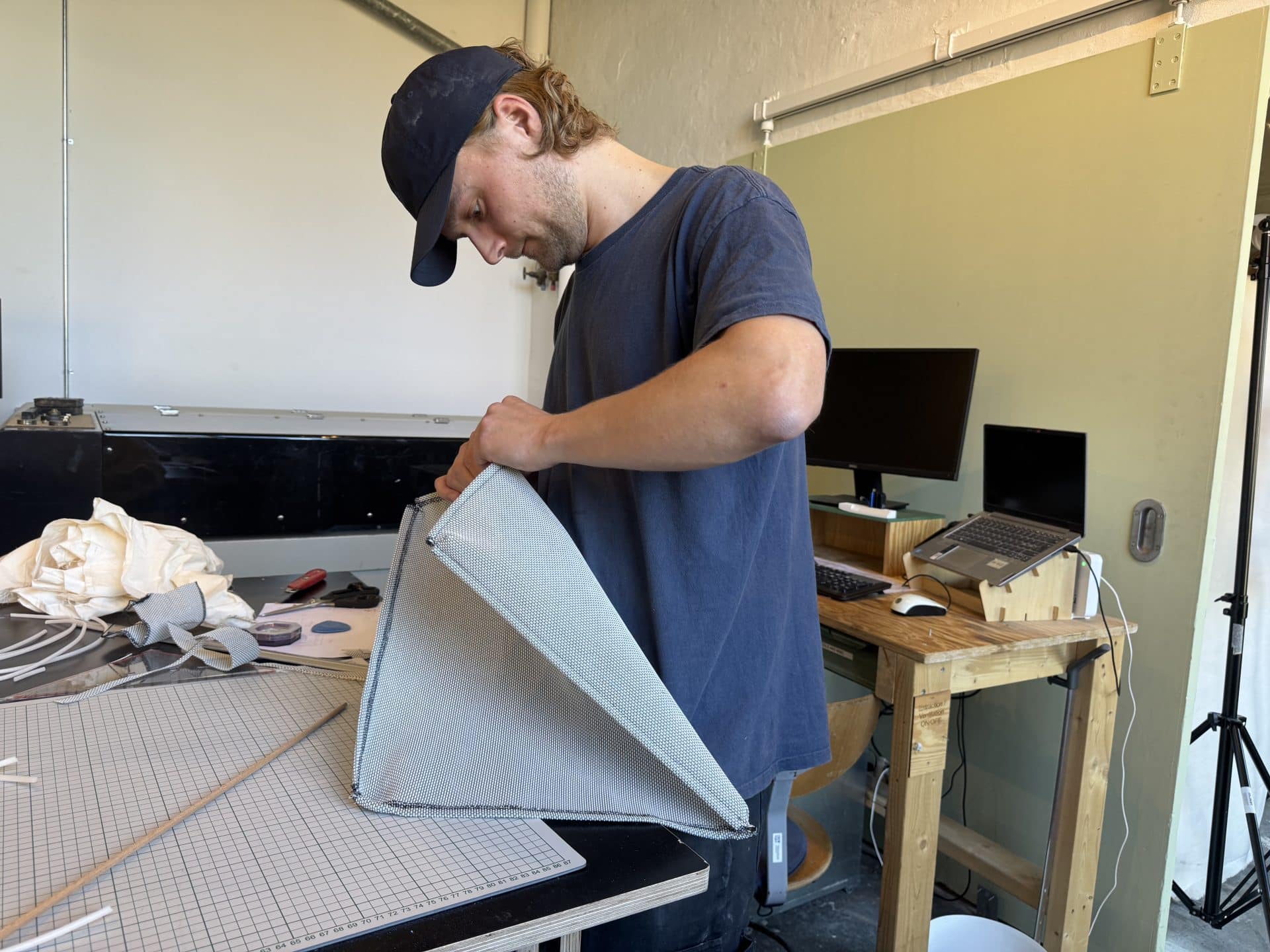
From student to running his own business
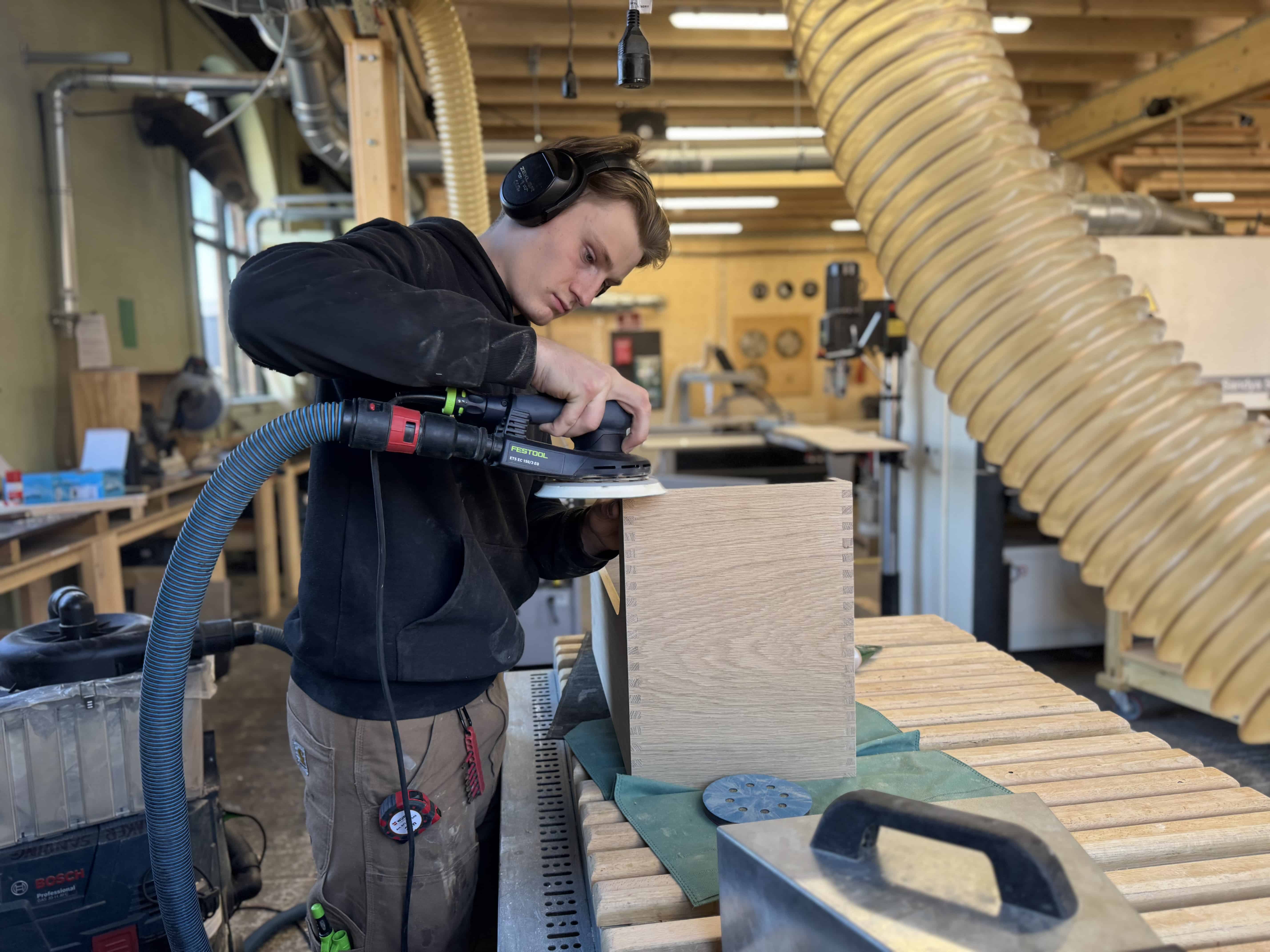
In the woodworking workshop, Jan is sanding a kitchen drawer – the final piece he needs to complete a new kitchen for a client. His story is one that stands out in Denmark’s otherwise rather disheartening statistics on the number of newly registered businesses, and is a concrete example of why the Otto Mønsted Foundation has awarded LITRA a grant.
Jan left secondary school this summer and is due to start an apprenticeship as a joiner in four months’ time. He already runs his own small joinery business at LITRA, where he also works a couple of days a week for one of the other joiners there.
Jan had also looked at other workshops before deciding to join LITRA.
“This workshop is really lovely because there are hand tools you can borrow. I’ve now bought some of my own, but otherwise all the hand tools you need are here. And there’s a fantastic sense of community. There are architects and furniture upholsterers, so there’s plenty of collaboration. Right now, we’re working on a project for one of the architects out here, amongst other things. That way, you can build both social relationships and business connectionsacross differentdisciplines.”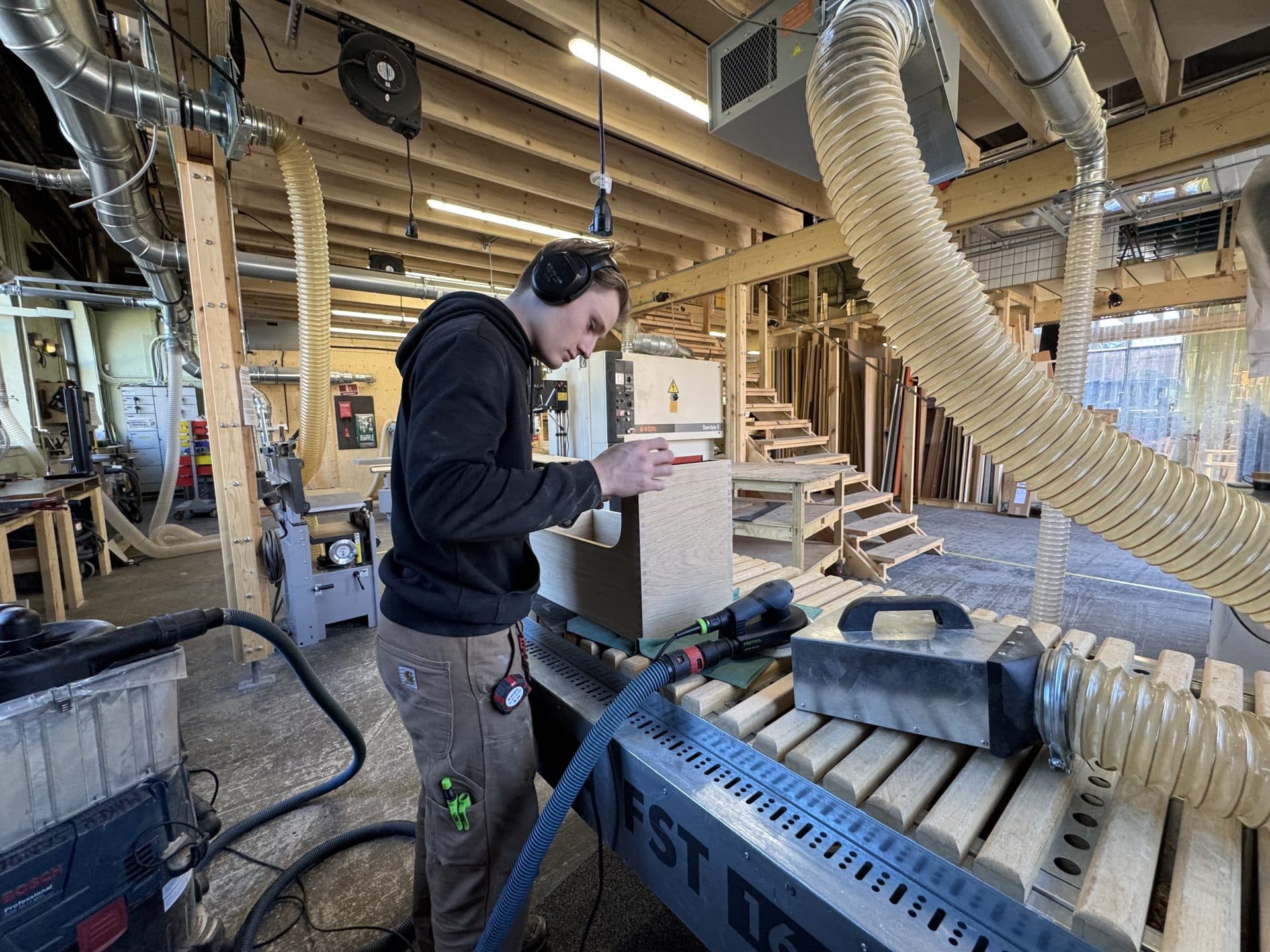
Funding for more square metres
The Otto Mønsted Foundation has supported the establishment of LITRA with one million kroner. The funds have been used, amongst other things, for the construction of a mezzanine, which has created more usable square metres in the old smithy, as well as for machinery, workshop equipment and safety measures. Safety is particularly important, not only for members in their day-to-day activities, but also to enable the premises to be opened to guests for workshops and events where new ideas and collaborations can flourish.
Facts about LITRA
Maker is a non-profit members’ association focusing on physical entrepreneurship. LITRA is aimed, amongst others, at:
- students and apprentices from vocational and higher education programmes
- start-ups, entrepreneurs and small businesses within manufacturing, design and technology
- established companies seeking innovation through collaboration with new disciplines and businesses
- citizens and local communities