 En
 Da

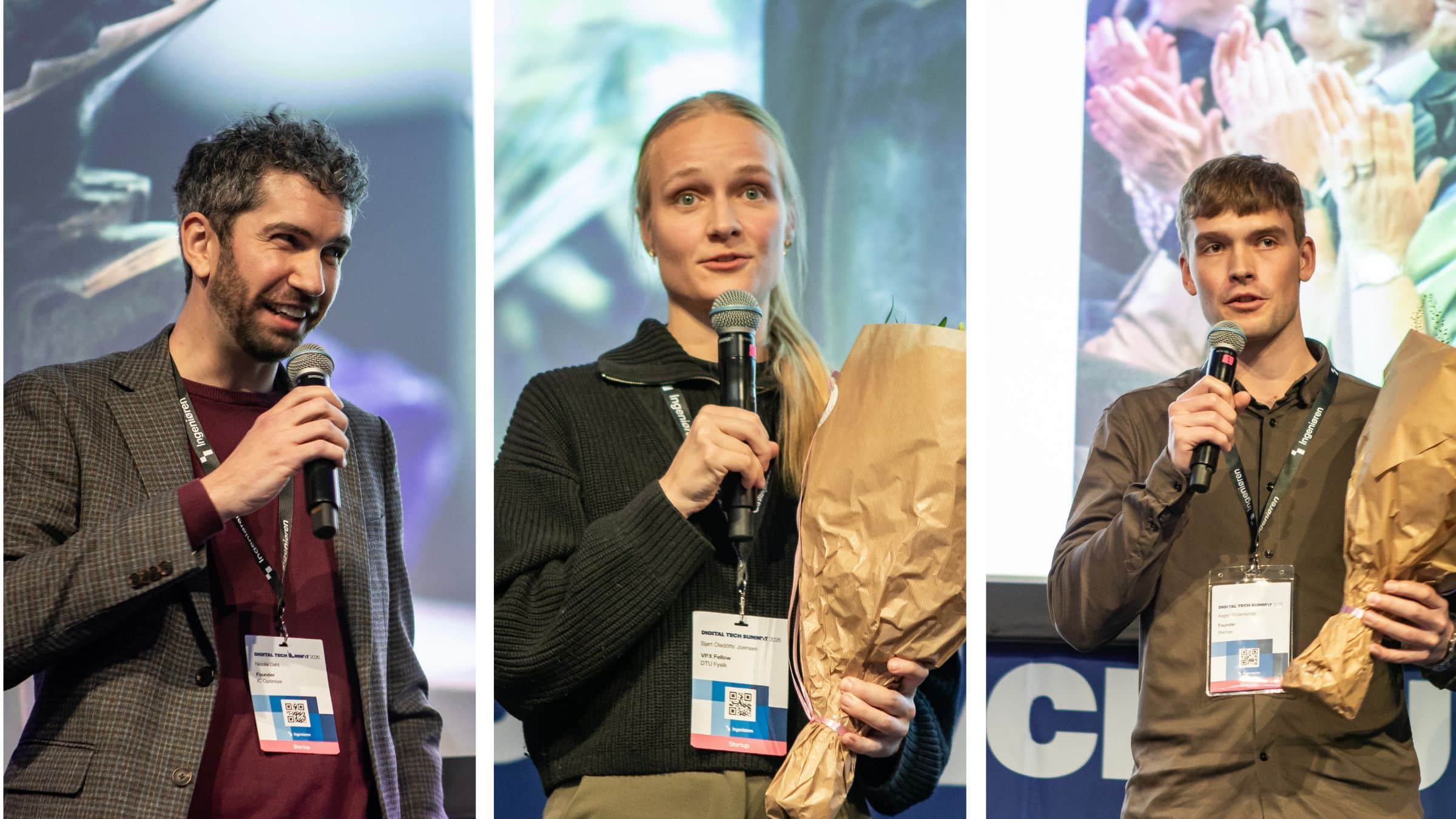
Through the Bright Idea Award, the Otto Mønsted Foundation supports researchers and entrepreneurs in their efforts to turn new technological ideas into solutions and businesses with commercial potential.
When the Otto Mønsted Foundation presented the award on 4 November for the eighth year running, it was two research teams from DTU and a bachelor’s student from Aarhus Business Academy who had convinced the award jury of the talent and potential behind their innovative, award-worthy ideas.
There was applause for optimised microchips, sustainable chemicals and intelligent energy management as the prize was presented in front of an audience on the Startup Stage during the Digital Tech Summit at Øksnehallen in Copenhagen.
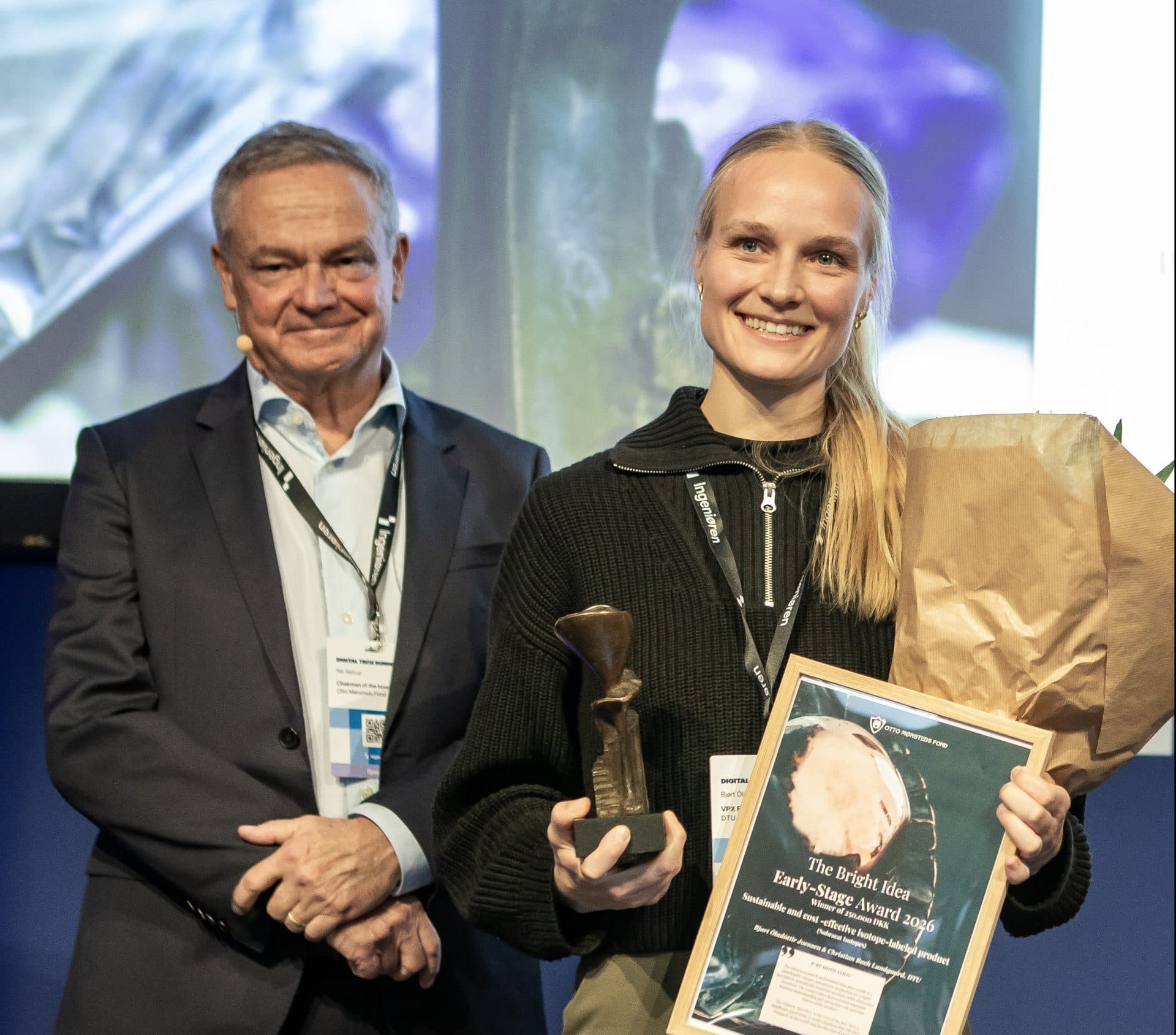
The Foundation’s chairman, Nis Alstrup, presented this year’s awards to the winners in the two main categories, The Bright Idea Early-Stage Award and The Bright Idea Late-Stage Award, both of which received 250,000 kroner and a bronze statuette. As a new feature this year, the Otto Mønsted Foundation also presented The Bright Idea Fast-Track Award, worth 100,000 Danish kroner.
Faster development of microchips
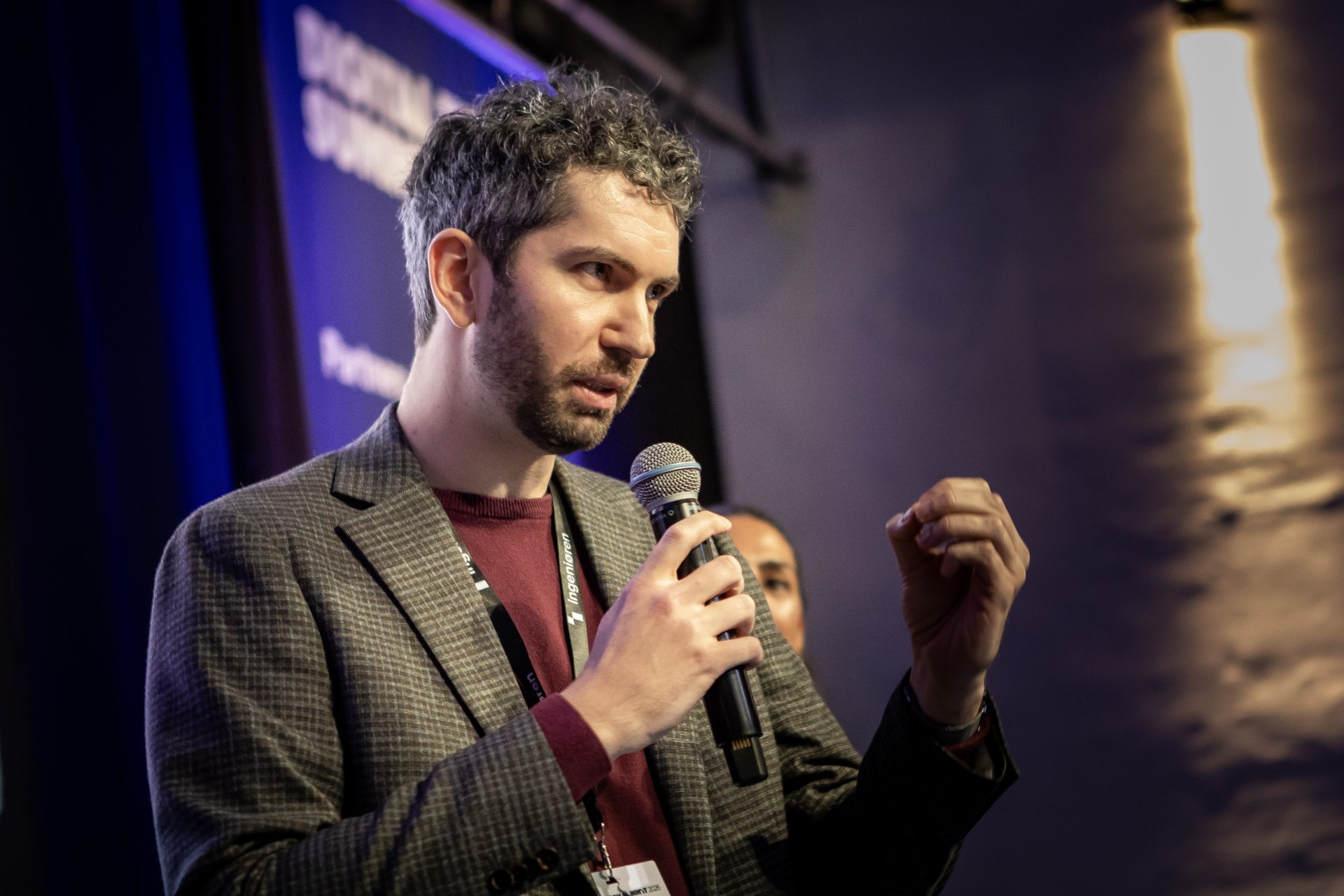
The Bright Idea Late-Stage Award went to Nicolai J. Dahl from DTU for his idea ‘Design Optimisation for Analogue Microchips’.
The technology has laid the foundations for the start-up company IC Optimize, which makes the design and development of analogue microchips faster and more energy-efficient. It is a solution with great potential at a time when microchips are playing an increasingly important role.
The company has already secured its first clients in the research sector and is in discussions with several commercial enterprises.
Greener production of speciality chemicals
The Bright Idea Early-Stage Award went to Bjørt Óladóttir Joensen from DTU and Christian Bach Lundgaard, both VPX Fellows, for the idea ‘Nobracat Isotopes’ – sustainable and cost-effective isotope-labelled products.
The idea paves the way for significantly cheaper and more environmentally friendly production of deuterated chemicals – highly specialised chemical products with numerous scientific and industrial applications. The winners have developed a technology that can alleviate current bottlenecks in the market, which consist of high prices, insufficient supply and long delivery times.
According to the jury, the idea has the potential to create a business that can give Denmark a strong international position in this field.
New award for intelligent energy management
This year’s Bright Idea Fast-Track Award, worth 100,000 kroner, is being awarded for an idea that utilises existing technology in a new, innovative way.
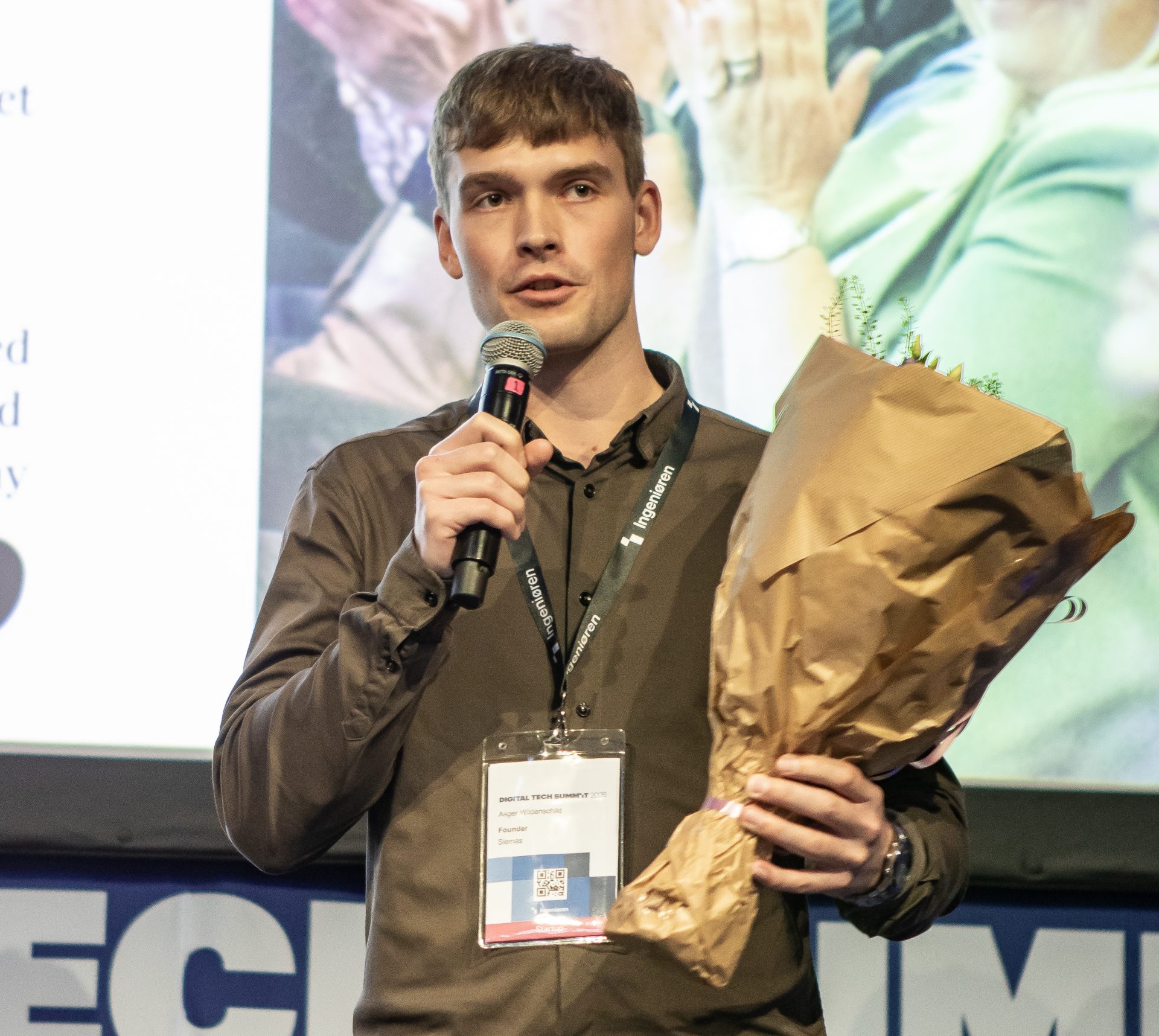
The prize went to Asger Wildenschild from Aarhus Business Academy and Siemas. The winning idea is an algorithm that combines electricity prices and weather data with information on a cold store’s stock levels, thereby optimising the control of the refrigeration system and reducing energy consumption, costs and CO₂ emissions.
Four finalists honoured
The other finalists in each category were also honoured for their ideas and each received 20,000 kroner.
The Bright Idea Early-Stage finalists:
- Julian Lava, Katrine Qvortrup, Jan Jakob Holm-Weber and Katrine Maarlev, DTU: Light-Activated Indigo Dyeing for Low Impact Fashion (a more sustainable method for indigo dyeing of textiles).
- Rasmus H. Thomsen and Asger Ajs Dam, Aarhus University (AU): Intelligent Condition Monitoring of Critical Plain Bearings (intelligent monitoring of critical plain bearings in bridge structures).
The Bright Idea Late-Stage finalists:
- Andrea Russo, DTU: FIBERNEX: Next-Generation Electrodes for Green Hydrogen (new electrode technology for more efficient production of green hydrogen).
- Jeppe Nørregaard (ITU), Alicia Scott and Lasse Nørregaard (DTU): Defence Against Manipulative AI Integration in the Market (a solution aimed at combating the manipulative use of artificial intelligence in the market).
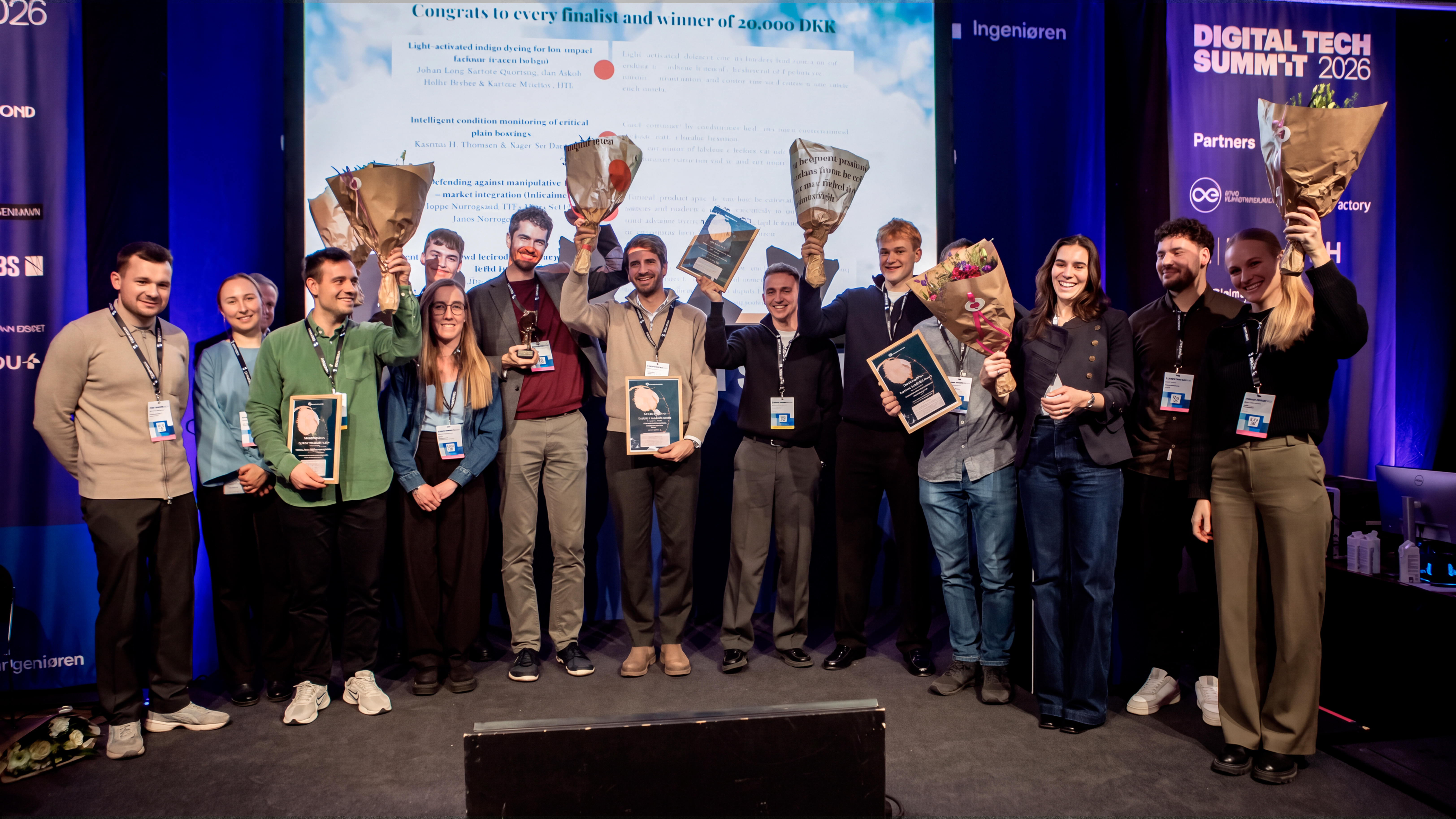
Well-deserved recognition for all winners and finalists brought this year’s awards ceremony to a close.
Photo: Dan Møller