 En
En  Da
Da
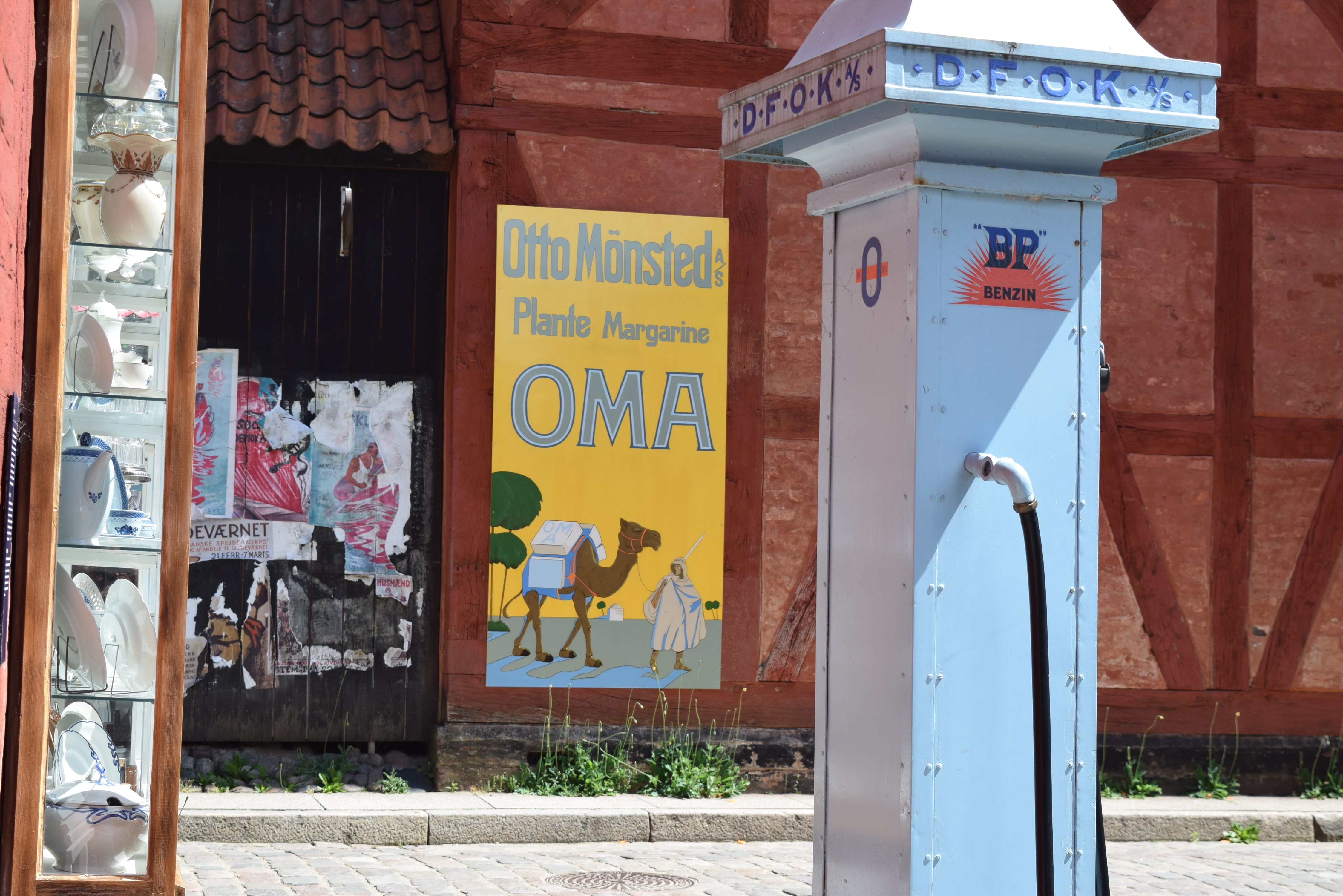
As one of the pioneers of advertising, it’s only natural that Otto Mønsted’s well-known advert now adorns the old city district of Aarhus.
We are approaching summertime, when both holidays and summer weather are good reasons to get around in the outdoor cultural landscape. One of the country’s biggest historical attractions, the Old Town in Aarhus, is always worth a visit, and in one of the Old Town’s neighbourhoods, you can now clearly experience the importance of Otto Mønsted as one of the pioneers of advertising in Denmark at the time.
One of several new gable paintings in the Old Town is one of Otto Mønsted’s iconic adverts, the Bedouin and the camel with the margarine yellow horizon as a background. It was an advert for OMA, which was the margarine jewel in the Aarhus manufacturer’s extensive range of brands at the time and represented the finest margarine quality.
Recreating a gable from photos and a grocery counter
Museum curator Erik Nielsen explains the process of recreating the gable painting as close to the original as possible.
“In our 1927 Quarter, we made some gable advertisements to add some colour to the cityscape. We looked at old pictures from the 1920s from all over Denmark, and there were also some gable advertisements from Otto Mønsted’s margarine, including adverts for OMA. Then we chose a painting that we wanted to emulate and were lucky to find the original colours because we had found the same advertising motif painted on an old grocery counter. So we had a good basis in that the images showed that the advertisement had undoubtedly been in the streets and on the counter we could see what the colours looked like in the old days. Then it was just a matter of giving it to the painters and they did it,” says Erik Nielsen.
Advertising created the foundation
Nothing was random in the adverts that Otto Mønsted created alone or together with skilled employees. And his efforts largely paved the way for his position as one of Denmark’s most successful businessmen. Otto Mønsted understood better than anyone how to target his messages to housewives through print advertising, commercials, promotions, illuminated advertising and signage on facades and vehicles.

The gable advertisement, which is now reproduced in Den Gamle By, was also carefully thought out. The choice of the camel and Bedouin was intended to create associations with the exotic ingredients that were imported from a world unknown to most people. Otto Mønsted also liked to use large herbivorous animals in his adverts so that no one would doubt that margarine was a nutritious product that provided muscle power, even though it was a vegetable product.
Otto Mønsted was not the only one who made margarine, but he was one of the few who understood how marketing can create a business adventure that gained a reputation far beyond the country’s borders and created thousands of jobs. This is why he is featured in the permanent exhibition in the Aarhus City Museum in the Old Town, which shows Aarhus’ development through the ages.
“We also have something about Otto Mønsted, because he founded his margarine factory here in Aarhus and is described as one of those who created the “new Aarhus” from the 1850s onwards and helped make it the second largest city in Denmark,” says Erik Nielsen.