 En
 Da

When the Maker association opened a laboratory for sustainable product development beneath Langebro in Copenhagen in 2015, the aim was to create better opportunities for hands-on entrepreneurship. Craftspeople, designers and people from other professional backgrounds were to come together under one roof and gain access to workshops and expertise that could turn an idea into a product – and perhaps lay the foundations for a start-up.
Back then, focusing on craftsmanship wasn’t necessarily the most obvious path to take.
“In 2015, people were a bit sceptical when someone said we needed to include the craft trades, because back then everyone was looking at fintech. But it has, of course, turned out to be the right path,” says Malte Hertz Jansen, managing director at Maker.
In April 2026, Maker took a new step to strengthen opportunities for physical entrepreneurship and moved into DSB’s heritage-listed blacksmith’s forge, dating from 1907, in Jernbanebyen in Copenhagen. Here, the association has so far converted 1,000 m² into an open workshop and knowledge centre called LITRA.
LITRA combines traditional craftsmanship with modern technology and is a community of members where students, entrepreneurs, established small businesses and professionals work side by side. Facilities include a woodworking workshop, digital fabrication facilities and space to develop prototypes, products and new businesses.
Around 65 active members aged between 19 and 73 currently use the premises. Together, they represent 25 different professions.
You learn by building things yourself
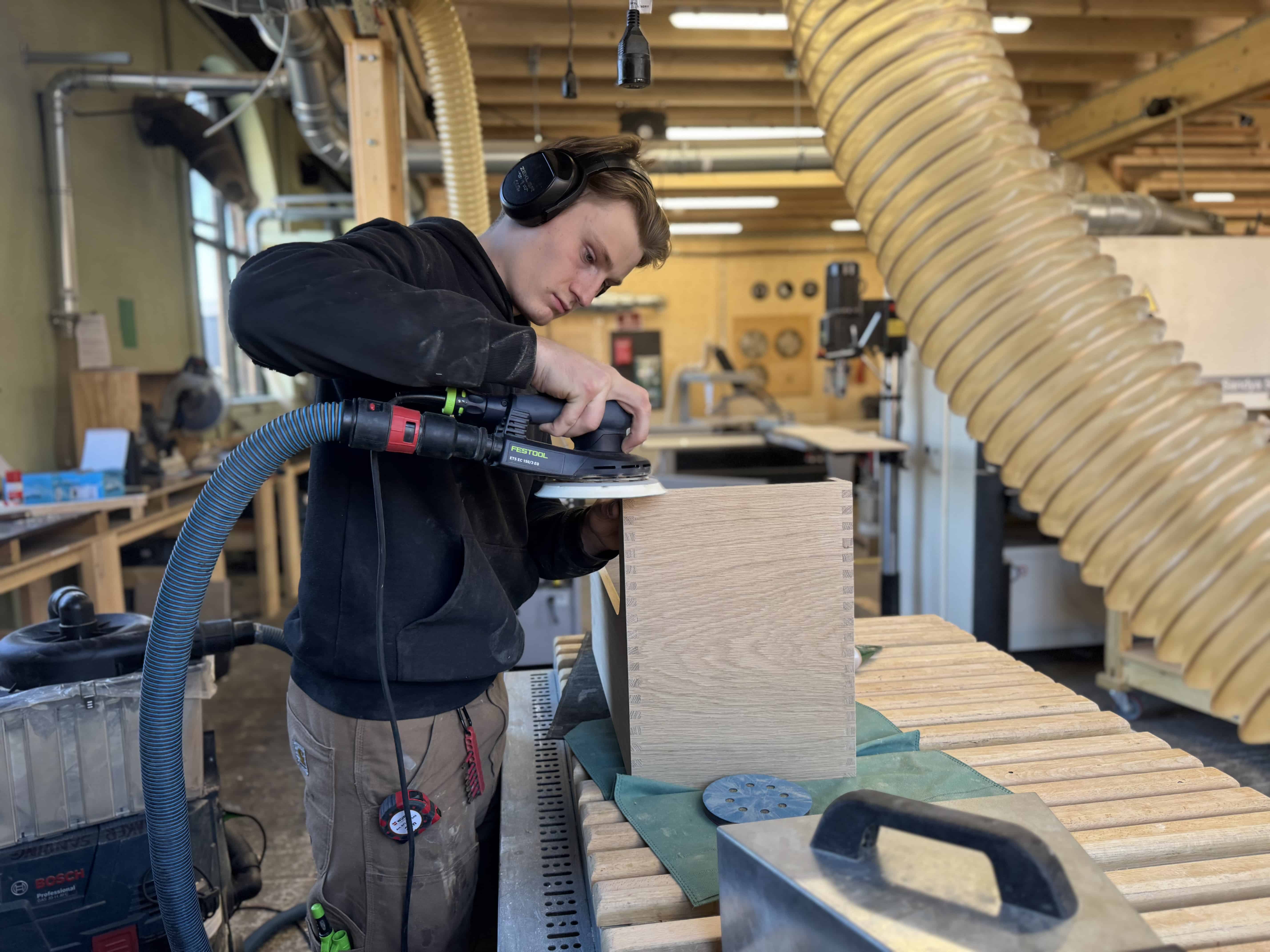
On a tour of LITRA, the Otto Mønsted Foundation meets Felix, who works at an architectural practice. Over the past four to five weeks, he has been using the workshop to complete a prototype chair, and he has now reached the upholstery stage.
He points out that at LITRA he has the opportunity to work on the prototype throughout the entire design process, and this has its advantages:
“I’ve used the State Workshops before, but you always have to apply for access and be approved. If a place like LITRA didn’t exist, and you couldn’t get into the State Workshops, we’d have to pay someone in town to make a prototype for us. But then we wouldn’t spot any faults in the prototype ourselves. You learn a great deal from having a hands-on approach to the entire design process,” says Felix.
It is precisely this opportunity to try things out, make adjustments and start again that is central to the idea behind LITRA. Here, the path from idea to finished product should be short, and members should be able to make use of both the workshops and each other’s expertise.
From student to running his own business
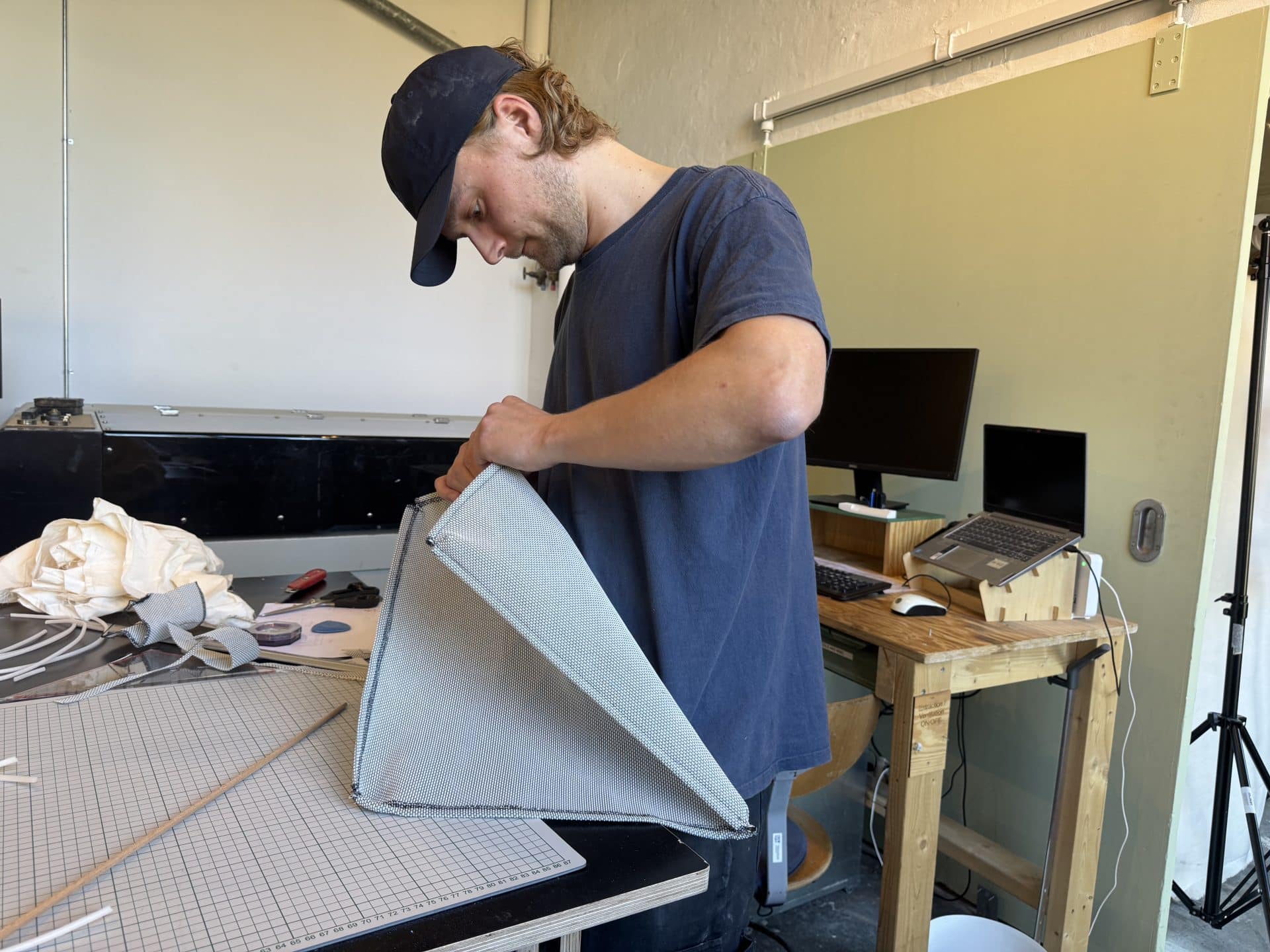
In the woodworking workshop, Jan is sanding a kitchen drawer – the final piece he needs to complete a new kitchen for a customer. His story is one that brightens up Denmark’s otherwise somewhat disheartening statistics on the number of newly registered businesses, and is a concrete example of why the Otto Mønsted Foundation has awarded a grant to LITRA.
Jan left secondary school this summer and will begin a training course as a cabinetmaker in four months’ time. He is already running his own small joinery business at LITRA, where he also works a couple of days a week for one of the other cabinetmakers there.
Jan had also looked at other workshops before deciding to become a member of LITRA.
“This workshop is really lovely because there are hand tools you can borrow. I’ve now bought some of my own, but otherwise all the hand tools you need are here. And there’s a great sense of community. There are architects and upholsterers, so there’s a lot of collaboration. Right now, we’re working for one of the architects out here, amongst other things. That way, you can build both social relationships and business connections across different disciplines.”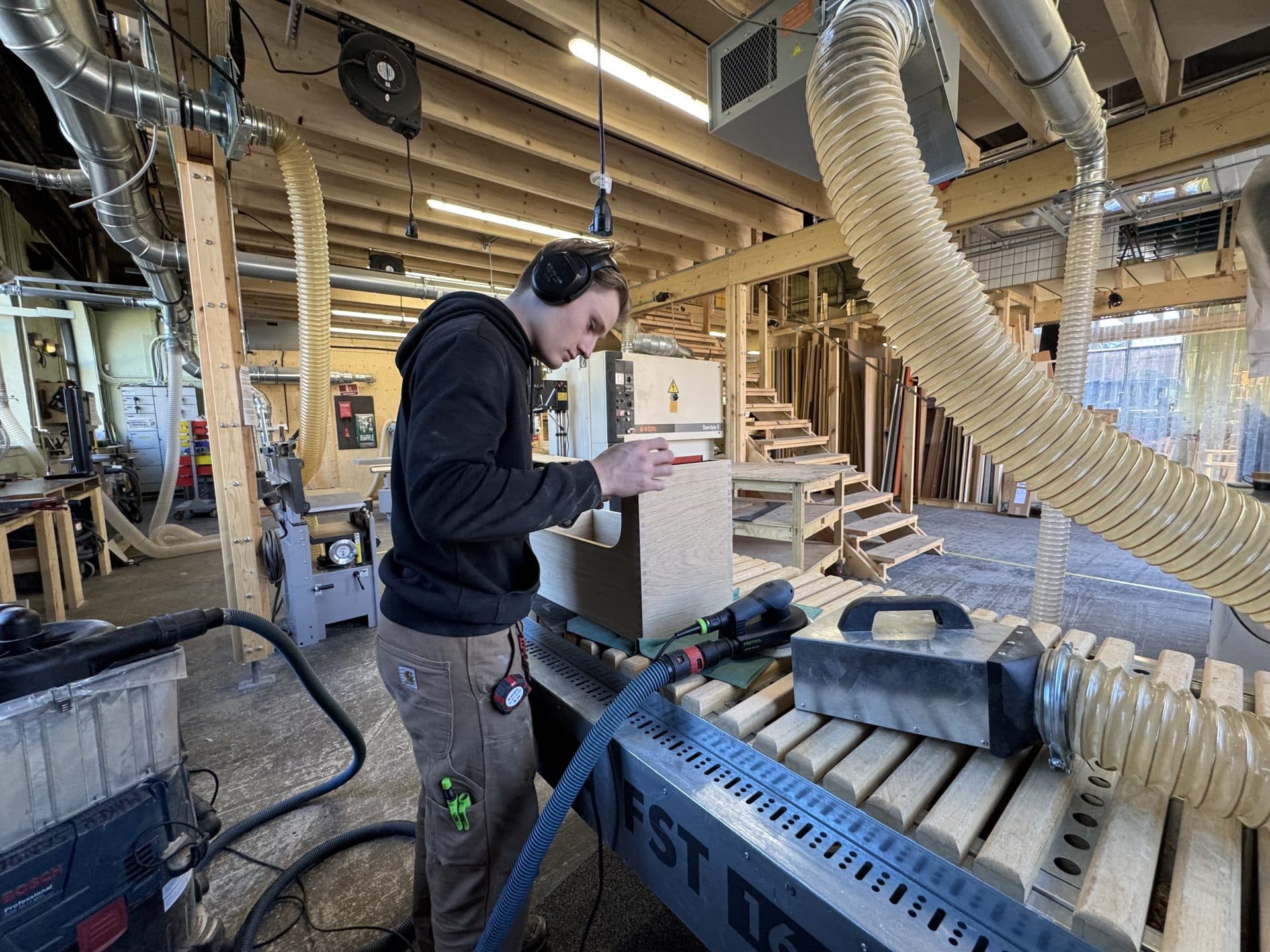
Funding for more square metres
The Otto Mønsted Foundation has supported the establishment of LITRA with one million kroner. Among other things, the funding has gone towards the construction of a mezzanine, which has created more usable square metres in the old blacksmith’s workshop, as well as towards machinery, workshop equipment and safety measures. Safety is particularly important, not only for members in their day-to-day activities, but also to enable the space to be opened to guests for workshops and events where new ideas and collaborations can flourish.
Facts about LITRA
Maker is a non-profit members’ association focusing on physical entrepreneurship. LITRA is aimed, amongst others, at:
- students and apprentices from vocational and higher education programmes
- start-ups, entrepreneurs and small businesses in the fields of manufacturing, design and technology
- established businesses seeking innovation through collaboration with new disciplines and companies
- citizens and local communities