En
En  Da
Da

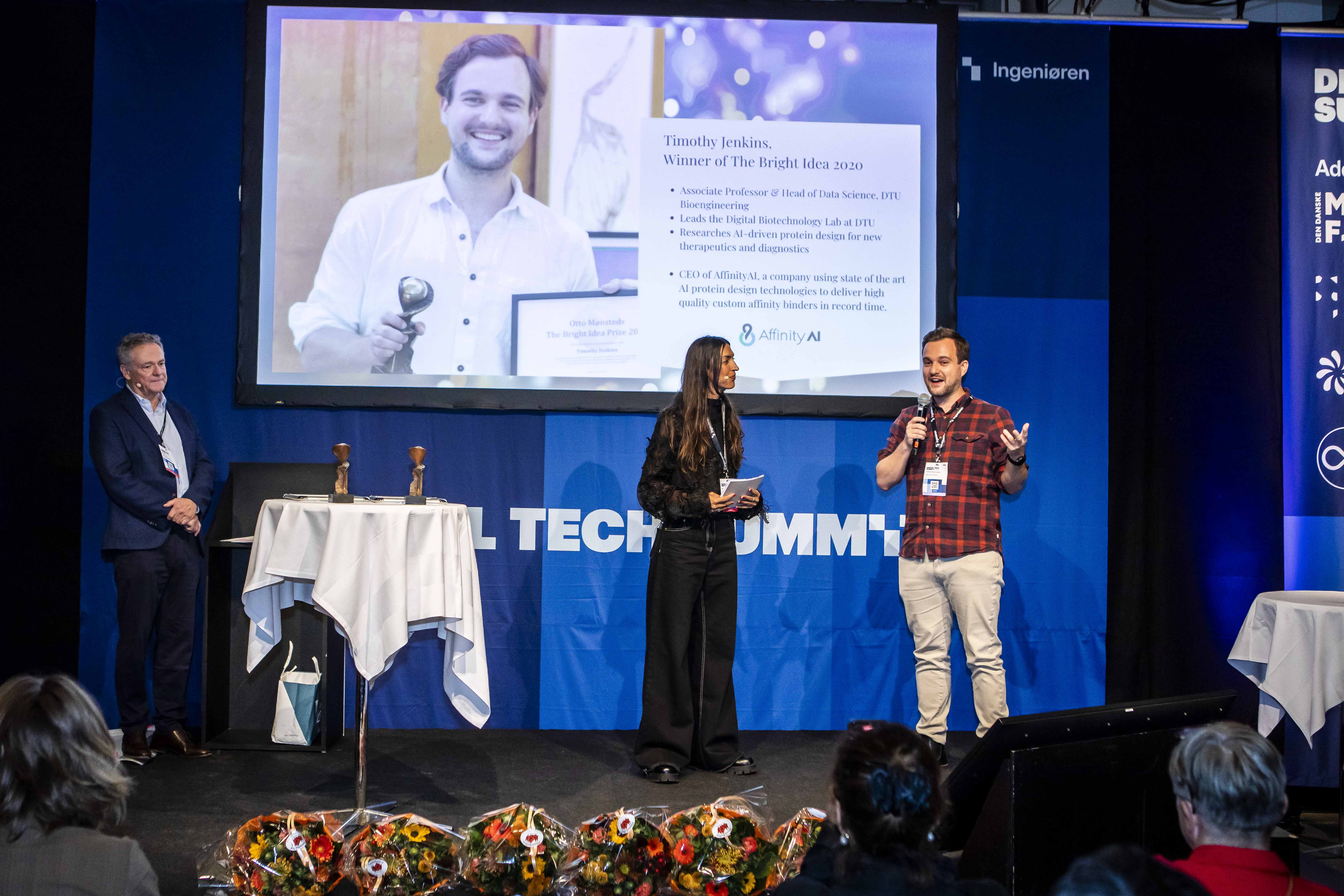
The annual award ceremony of The Bright Idea is a day many look forward to – not least this year’s finalists, who sat on the rows of chairs in front of the Startup Stage at the Digital Tech Summit in Øksnehallen on 5 November. For the seventh consecutive year, the foundation awarded DKK 500,000 to some of the country’s most talented researchers and startups, who can now accelerate the development of their winning ideas that are compelling solutions to some of the world’s challenges.
One winning duo has developed technology to ensure clean drinking water and the other winning team is showing great results using plant waste in CO₂-negative batteries.
The Bright Idea 2025 was awarded in two categories – the best early-stage idea and the best late-stage idea.
The Bright Idea Award jury has received an increase in applications for the Bright Idea Award, which has ambitions to contribute to sustainability and solutions to global challenges. This year, the jury has further motivated this focus by introducing a fifth criterion in the judging of a submitted idea – namely the extent to which the given idea contributes to the fulfilment of the UN Sustainable Development Goals. And this year’s winners of The Bright Idea 2025 were able to fulfil this criterion in both the early-stage and late-stage categories, where a winner is chosen each year.
Green battery technology as a strong alternative to lithium batteries
We use lithium batteries in everything from electric cars to mobile phones, but we know they come with a price in terms of scarce resources, the environment and security of supply.
This year’s winner in the early-stage category had a compelling solution to an alternative. The team developed a technology that converts plant waste into biochar in CO₂-negative battery anodes. Biochar in the important battery component, the anode, acts as storage space for sodium ions, the future green replacement for the limited element lithium.
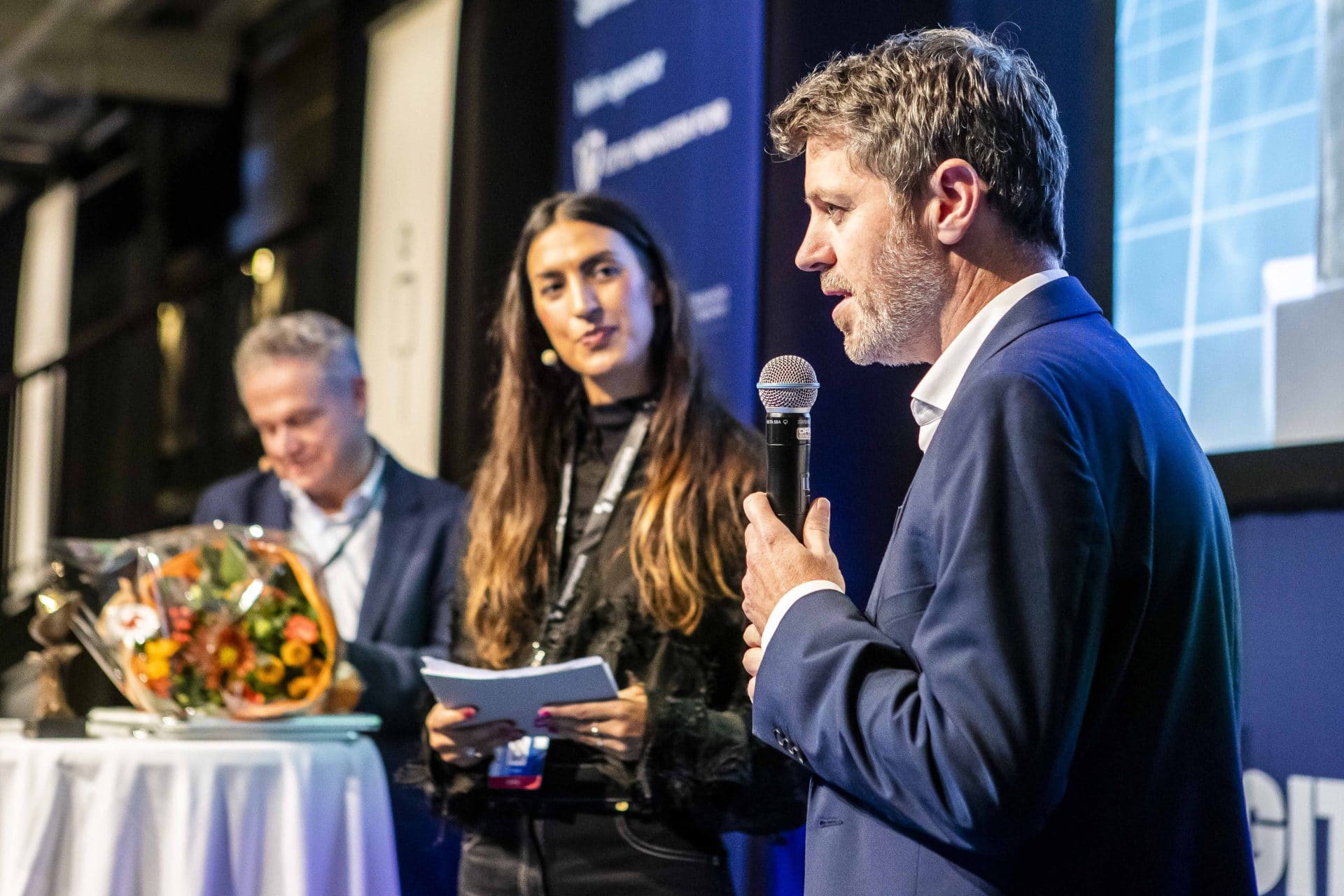
Behind this award-winning solution, BioNa, is the team: Thomas Howard, Szymon Dyszewsji, Johan Hjelm all from the Technical University of Denmark – and Zoe Kika from Copenhagen Business School and Peter Curran from the University of Bath. The team received a cash prize of DKK 250,000 for, among other things, continued testing of the winning idea.
The jury’s motivation:
“Battery technology is a key part of the green transition, which is currently an area characterised by geopolitical challenges. The jury was impressed by the bright idea of converting biological raw materials into biochar for anodes in sodium-ion batteries inaCO₂-neutral way – while achieving a performance that outperforms the competition. The presentation of the collaboration with Danish industry and the associated business plan was also an essential part of the nomination.”
Huge potential for drinking water rental
This year’s winning idea in the late stage category is a much-needed boost to a world where more people die from the effects of contaminated drinking water than from natural disasters and conflicts.

The winners in the late-stage category were two master’s students, Andreas S.H. Rygaard and Viktor R. Tamstorf, from the Technical University of Denmark, who have developed compelling technology to help achieve the global goal of clean drinking water by 2030. The winners received DKK 250,000 for their continued work with Njord Aqua.
The winners have developed a simple device that enables one of the most effective water purification principles – electrochlorination – to be applied at household level. The winning idea disinfects water directly in the water tank, ensuring hygienic water for drinking, bathing, cooking and domestic use. It can be powered by many energy sources and is more efficient, cheaper, requires minimal maintenance and has a long lifetime compared to competing solutions.
The jury’s motivation:
“The team has convincingly built on Denmark’s strong traditions in water technology and developed a solution that can change the lives of millions of people over the next 10 years and has significant export potential. With a simple solution combined with a solid use case, the team has demonstrated excellent results both technically and commercially for The Bright Idea.”
In addition to the cash prize, each of the winners received a bronze statuette by artist Stine Ring.
Honours for the finalists
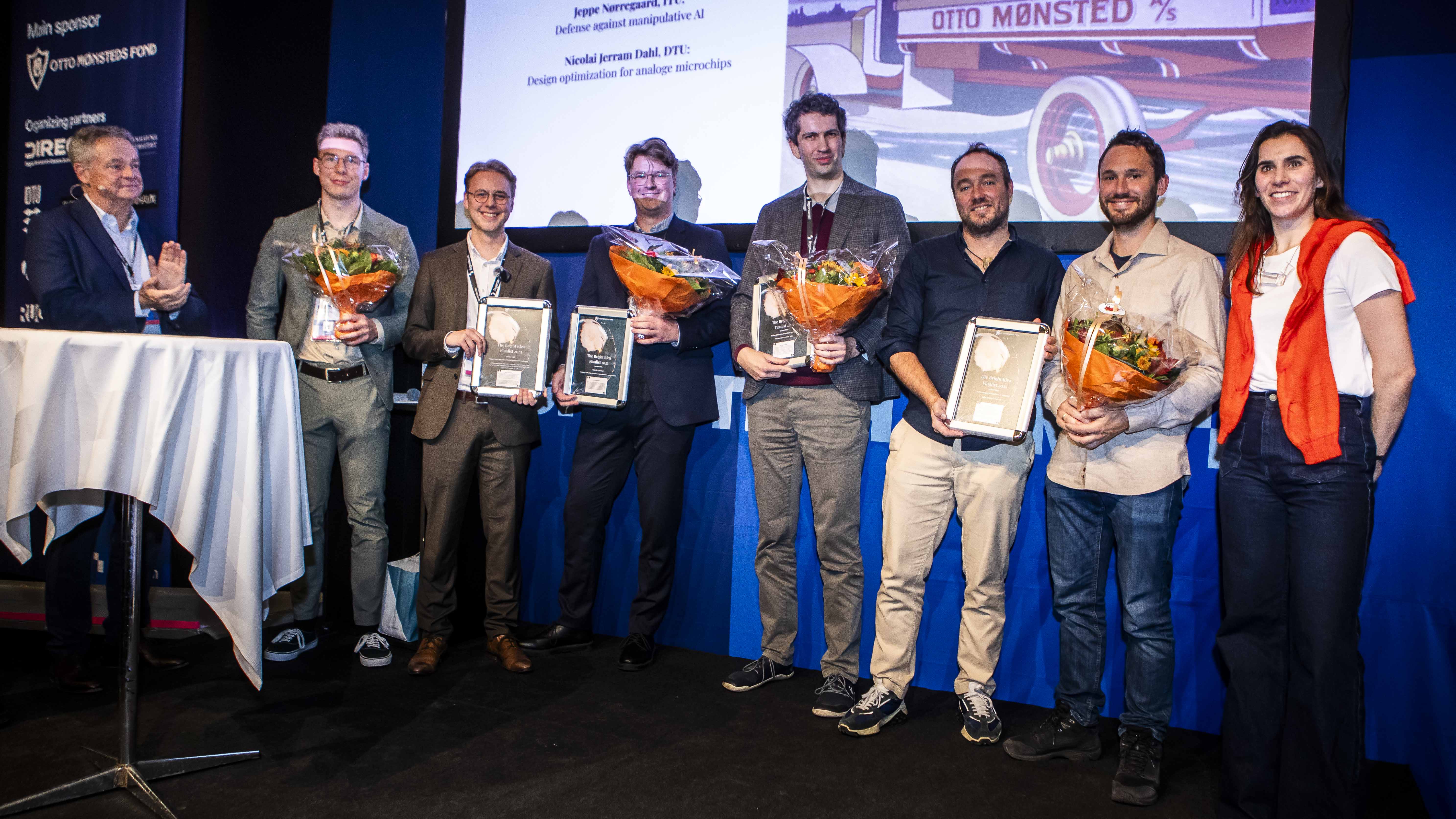
In addition to the main winners, the jury also wanted to honour four finalists, two in each category, with DKK 20,000 each.
Finalists at an early stage:
Andreas Erik Gejl Madsen and Jesper Gluckstad from the University of Southern Denmark for:
HoloTile Quantum – solving a key problem in making functioning quantum computers at scale.
Christoffer W. Erbs and team from Aalborg University for:
Organic thin-film solar cells with pigment from fungi.
Late-stage finalists:
Jeppe Nørregaard, IT University of Copenhagen for:
Defence against manipulative AI.
Nicolai Jerram Dahl, Technical University of Denmark for
Design optimisation for analogue microchips.
Facts about the award
All of this year’s submissions were judged by a jury that evaluated each idea based on excellence in thought, communication, analysis and documentation. In addition, an idea must demonstrate commercial vision and understanding to support the foundation’s purpose of creating value for Danish trade and industry. The jury also assesses the likelihood of the idea being implemented, the value and importance of the idea for Danish business and the extent to which the idea can contribute to the UN Sustainable Development Goals.
The next period for submitting projects for The Bright Idea Award is from mid-April to mid-August 2026.
All this year’s nominations are judged by:
Kigge Hvid, partner, JA studio, Ole Kring, former partner, EIFO, Bjarne Kjær Ersbøll, professor DTU Compute and member of the board of the Otto Mønsted Foundation, Nis Alstrup, chairman of the board of the Otto Mønsted Foundation, Karina Bergstrøm Larsen, director, Q-Consulting, Christian Brix Tillegreen, senior business developer, Bioinnovation Institute. Nigel Edmondson, CEO, MADE and Vibeke Svendsen, board member of the Otto Mønsted Foundation.