 En
En  Da
Da
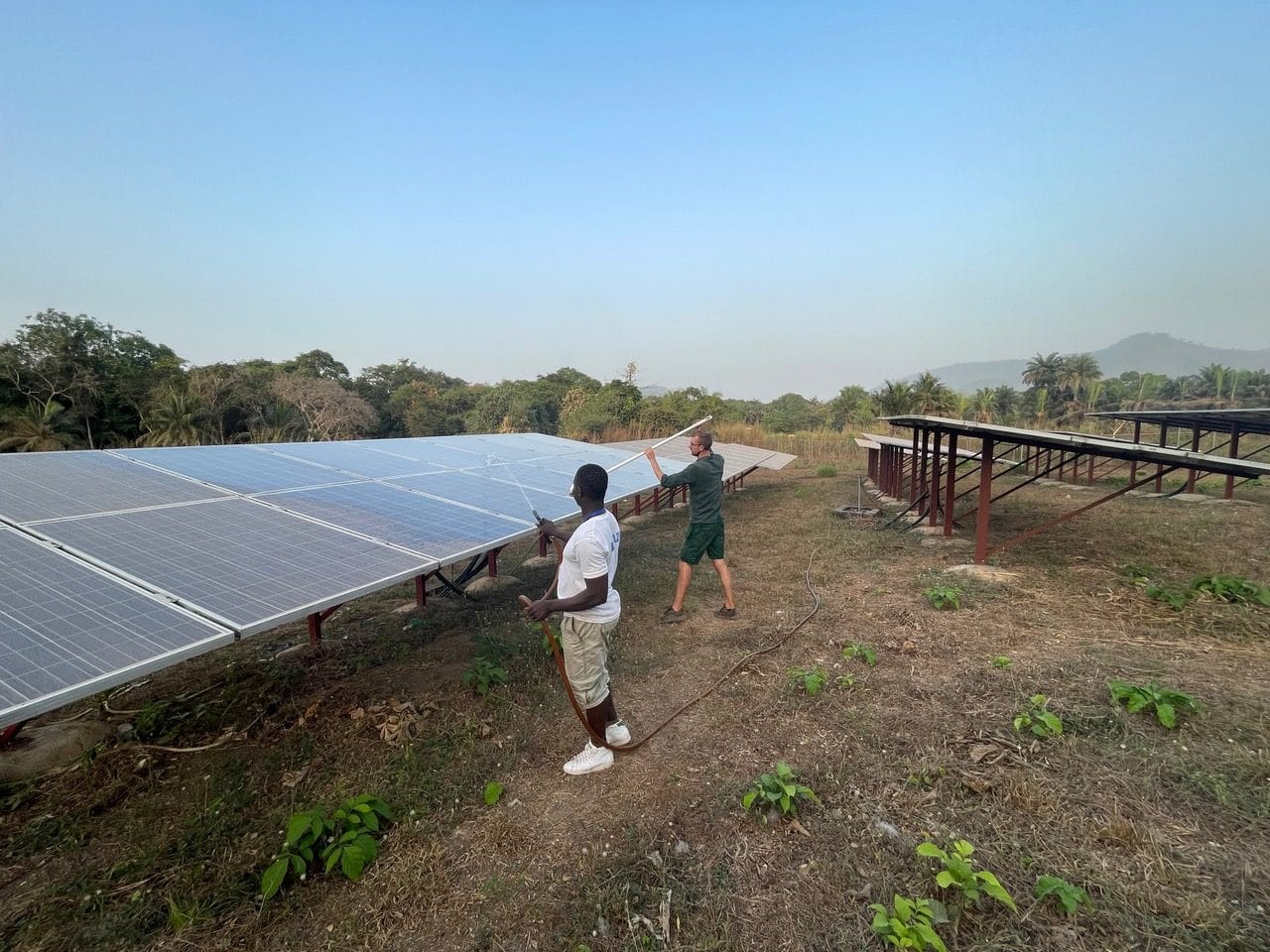
Engeneering World Health from DTU has deployed a team consisting of Cecilie Sackia Lochet Jacobsen, Nicole and Anders Sonesson working around the clock to ensure stable and safe power supply at Masanga Hospital deep in the jungle.
Masanga Hospital is a rural, 100-bed hospital in the Tonkolili district in the centre of Sierra Leone with a sparsely developed road network. The hospital covers an area of around 440,000 people who rely on Masanga for help with illness. Patients are treated for tropical diseases, falls from trees, motorbike or car accidents, eye injuries, complicated child births, etc. The hospital is named (masangahospital.org) after the village adjacent to the hospital. The Masanga Project is run by the association Masanga DK and consists of a hospital, a higher education institution and a research unit. Specialities include surgery including amputations, obstetrics (births and pregnancy) and gynaecology
Interview with Anders Sonesson

The main purpose of the project is to optimise the hospital’s electrical installations. The project will result in a stable power supply around the clock, with first priority given to the hospital’s surgical department, followed by the other departments and employees’ homes. The project requires more power, which is secured through a donation from Solar. The donation includes solar cells, which will arrive in March.Anders Sonesson is studying a master’s degree in geophysics and space technology at DTU. Anders is in his final semester and, with support from the Otto Mønsted Foundation, has set aside five months for an Engineering World Health project at Masanga Hospital in the middle of the jungle in Sierra Leone together with Cecilie Sackia Lochet Jacobsen and Nicole from DTU.
Anders spent January mapping and registering all cables and other electrical installations. The mapping created the necessary overview for a subsequent clean-up and planning of extensive renovation work. Many kilometres of cable need to be replaced, stretching across the entire hospital area. The work is carried out in close collaboration with the locals, who will be trained to be able to maintain the installations once the Danish engineers have travelled home.
What was your motivation for travelling to Masanga?
“I have travelled in Nepal before and have worked for many years for voluntary organisations such as the Danish Free Church and the Danish Heart Foundation, where I did intro workshops for the treatment of cardiac arrest. When I get involved in a project like this, I get to test myself. I develop my patience and communication skills. Both are prerequisites for finding the best solution in co-operation with my local colleagues. For me, helping other people has always been a natural driving force. I am motivated by finding the right solution to a problem. The more difficult the better. I may come with a lot of theoretical knowledge from my studies, but I get a lot of practical experience down here, and when we share my theory and my colleagues’ practical knowledge, we get the best solutions to the challenges that Masanga Hospital has,” says Anders.
What has made the biggest impression on you down here?
“The kindness of the locals, the high motivation of my colleagues and the hard work of the other European colleagues I have down here. It has also made me reflect on how easy it is to solve problems at home because the approach to spare parts is so relatively simple. A local Bauhaus is always just around the corner,” says Anders with a smile.
“Down here, I have to get the goods from China and delivery takes time. If I don’t order correctly in the first place, it takes twice as long. It’s a time waster.”
What are your operational goals for your stay?
- To provide stable, round-the-clock power to the hospital. It’s relatively simple, but it’s the single action with the biggest impact on daily operations.
- Replacing and extending cables that are no longer usable or too small for the purpose.
- Streamline power consumption so that the right departments have power when they need it. An example could be reducing the number of appliances, finding less power-hungry solutions and changing installations to better switch off areas that are not in use.
- Adjusting and customising generators and solar panels, as well as installing the new panels and tying them in with the existing system.
- To create manuals for the systems so that the system can be easily troubleshot should it fail.
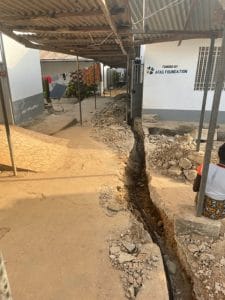
When we spoke to Anders, the outdoor excavation work was in full swing. It’s crucial to get the new cables in the ground before the rainy season sets in. During the rainy season, the focus is on the indoor tasks.
The facts
It was the Danish medical specialist Peter Bo Jørgensen who initiated the Masanga Project in 2005 when he started sending used but usable hospital equipment to Sierra Leone. The initiative was run by the association Masanga DK, which the following year also signed a contract with the local government to rebuild the hospital. It had been run as a leprosy hospital by the International Adventist Movement until 1997, and when the organisation left, rebels took over the hospital and left it in a miserable state at the end of the country’s 11-year civil war.
From the beginning, the idea has been to secure both the future of the hospital, but also to contribute to the health progress of the entire country through sustainability. Here, the reconstruction of the hospital and supplies of hospital equipment from Denmark go hand in hand with the Norwegian organisation CapaCare. The organisation has developed a training programme that trains non-physicians to do specific medical work and to train the local population in other health skills so that they could gradually take over the hospital themselves and pass on the skills to the rest of the country. When the programme began, Sierra Leone had only five surgeons and seven obstetricians in the entire country, and the project became a model for solving the acute health skills gap across the country.
Today, the hospital offers recognised healthcare training, including the country’s only physiotherapy programme, and has trained over 350 nurses who now work in hospitals across the country. Masanga Hospital has treated more than 200,000 patients since the project began.
Watch the YouTube video about the hospital at masangahospital.org.