 En
En  Da
Da

The objective of the Otto Moensted Foundation is to contribute to the development of Danish trade and industry.
According to the original deed of the foundation from 1934, the distributions from the Foundation are intended for:
- supporting the education of talented young businessmen and engineering students or graduates with no or limited private means.
- educating teachers at business schools, the Technical University of Denmark (DTU) and possibly the technical colleges in Denmark.
- promoting and developing plans and undertakings within trade and industry which the Board of the foundation deems to have the potential for promoting Denmark´s commercial and corporate sectors or otherwise being honourable for Denmark.
The Otto Moensted Foundation distributes around 20 to 25 DKK million regularly every year. In some years, it has made extraordinary large donations aimed, for instance, at establishing housing for visiting professors at DTU and at Copenhagen Business School.
The present Board continues to maintain a clear international focus, the priorities being to provide talented students with the opportunity to study abroad, to make it possible for skilled university researchers to attend conferences abroad or reside as visiting scholars at esteemed universities outside Denmark, and to appoint foreign visiting professors to enhance the academic level in Denmark. The Foundation supports different initiatives aiming at bringing research from academia into the business world.
See the video about Otto Mønsted’s Foundation
Meet a visiting professor who strengthen research and talent development
With a grant from the Otto Mønsted Foundation, the Technical University of Denmark (DTU) welcomed visiting professor Ioannis Economou from Texas A&M University in Qatar.
The grant covered a three-month stay at the Department of Chemical Engineering and Biotechnology, and the visiting professor’s contribution is considered to have been valuable for both the department’s ongoing research, teaching and DTU’s visibility in the global research environment.
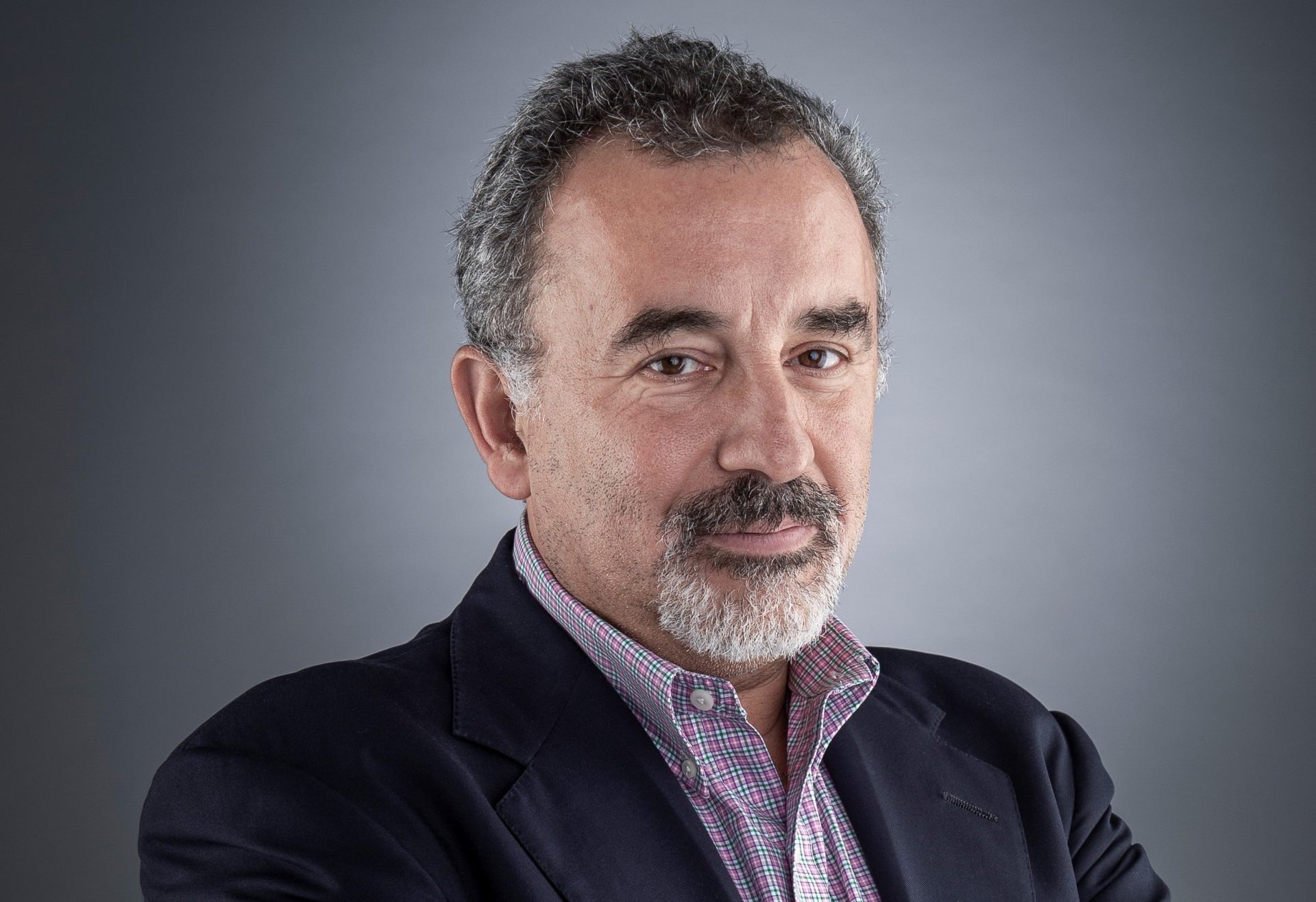
Visiting Professor Ioannis Economou primarily strengthened the university’s capacity in molecular modelling and sustainable technologies – an area of key importance for green transition and future energy systems. Ioannis Economou’s research area is the development of advanced computer models for molecular simulation that can predict how atoms and molecules behave and interact. The digital technology can be used to design new materials, predict pressure and temperature or to understand how different liquids and gases behave. All scientific simulations as a sophisticated alternative to conventional laboratory experiments.
With these methods of effective simulation, scientists can accelerate innovative developments such as better batteries, new chemical products, carbon capture methods and more efficient energy systems.
Course for young researchers
One of Ioannis Economou’s main tasks during his stay was to organise a three-week course in molecular simulation: “Molecular Simulation of Fluids: Fundamentals and Industrial Applications” for 12 PhD students, five postdocs and a few international participants from Portugal and Brazil.
In the first weeks, the participants gained insight into the latest theory on statistical mechanics and molecular modelling, followed by practical training in simulation tools. In the final week, participants worked on projects directly relevant to their own research.
The course contributed to upskilling the young researchers in advanced computational methods that they could apply directly to their own projects and the course evaluation showed that the participants had a very valuable outcome of the course.
Along the way, Ioannis Economou gave several lectures and participated as an external examiner for several PhD theses and collaborated with both professors and PhD students across the faculty, where he also acted as a link to international research communities.
During his stay in 2025, he also helped prepare applications for new research initiatives dealing with molecular design of new materials for sustainable technologies. This puts the university in a stronger position to compete for international research funding, including applications to the Novo Nordisk Foundation and the European Research Council.